Field guide
How to read an old map.
Old maps were made to be read slowly. Once you know what to look for, every sheet tells you who made it, how, and what mattered to the people who used it. Here’s a short guide, illustrated with maps from the Library of Congress.
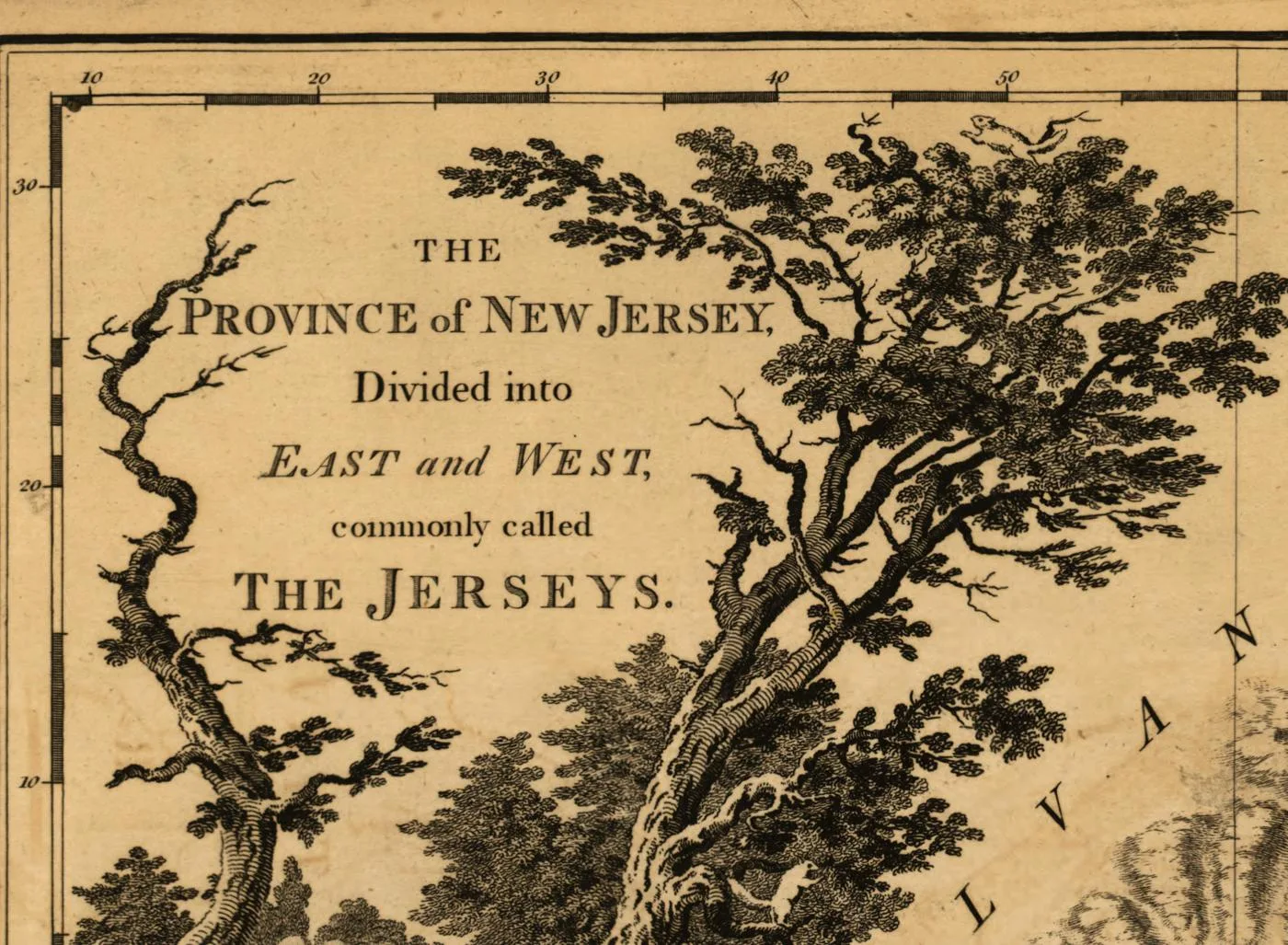
Cartouche
The decorated frame that holds a map's title, maker and date. Engravers loaded them with trees, figures and scrollwork, and they're often the first place a collector looks.
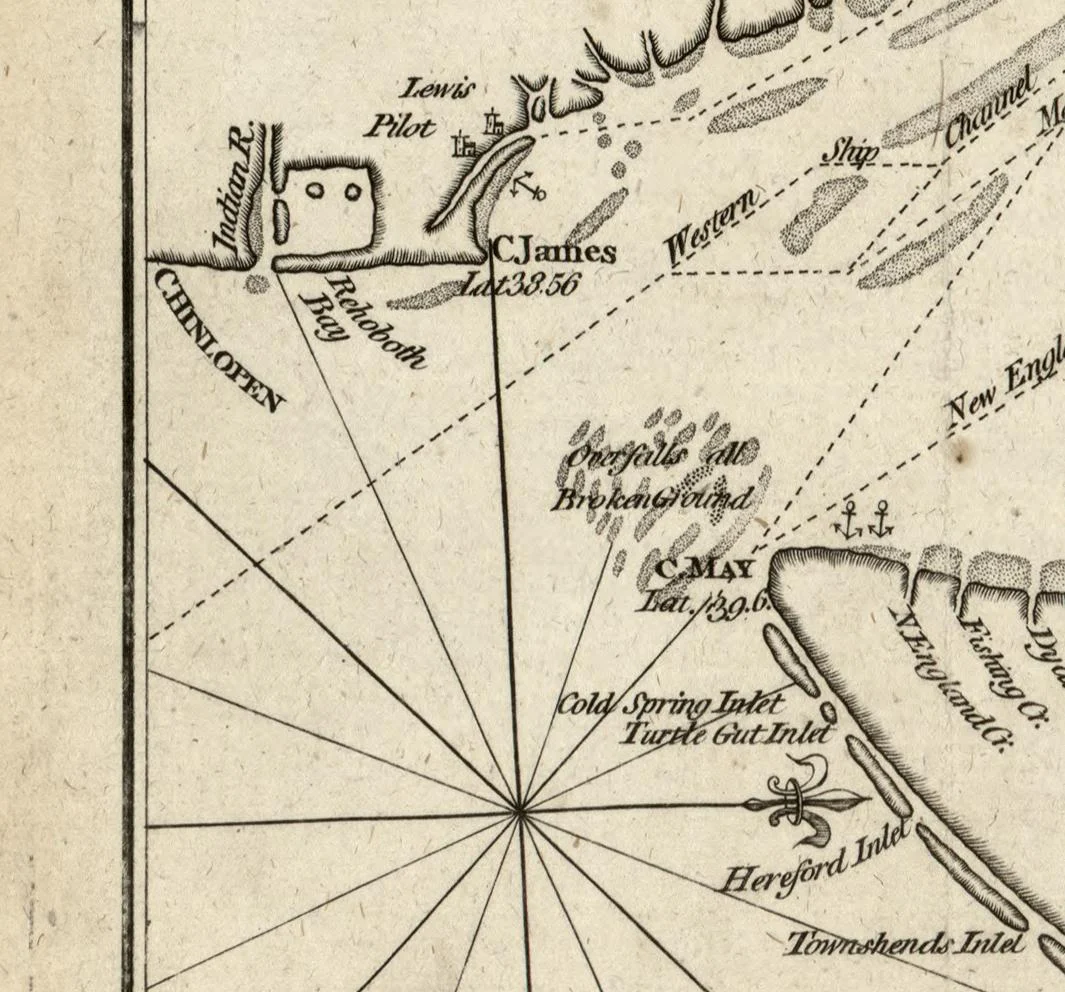
Compass rose & rhumb lines
The star that shows direction. On sea charts, straight lines fan out from it so a navigator could lay a ruler from port to port and read off a steady heading.

Hachures
Before contour lines, mapmakers showed hills and ridges with thousands of short shading strokes. The steeper the slope, the darker and denser the strokes.
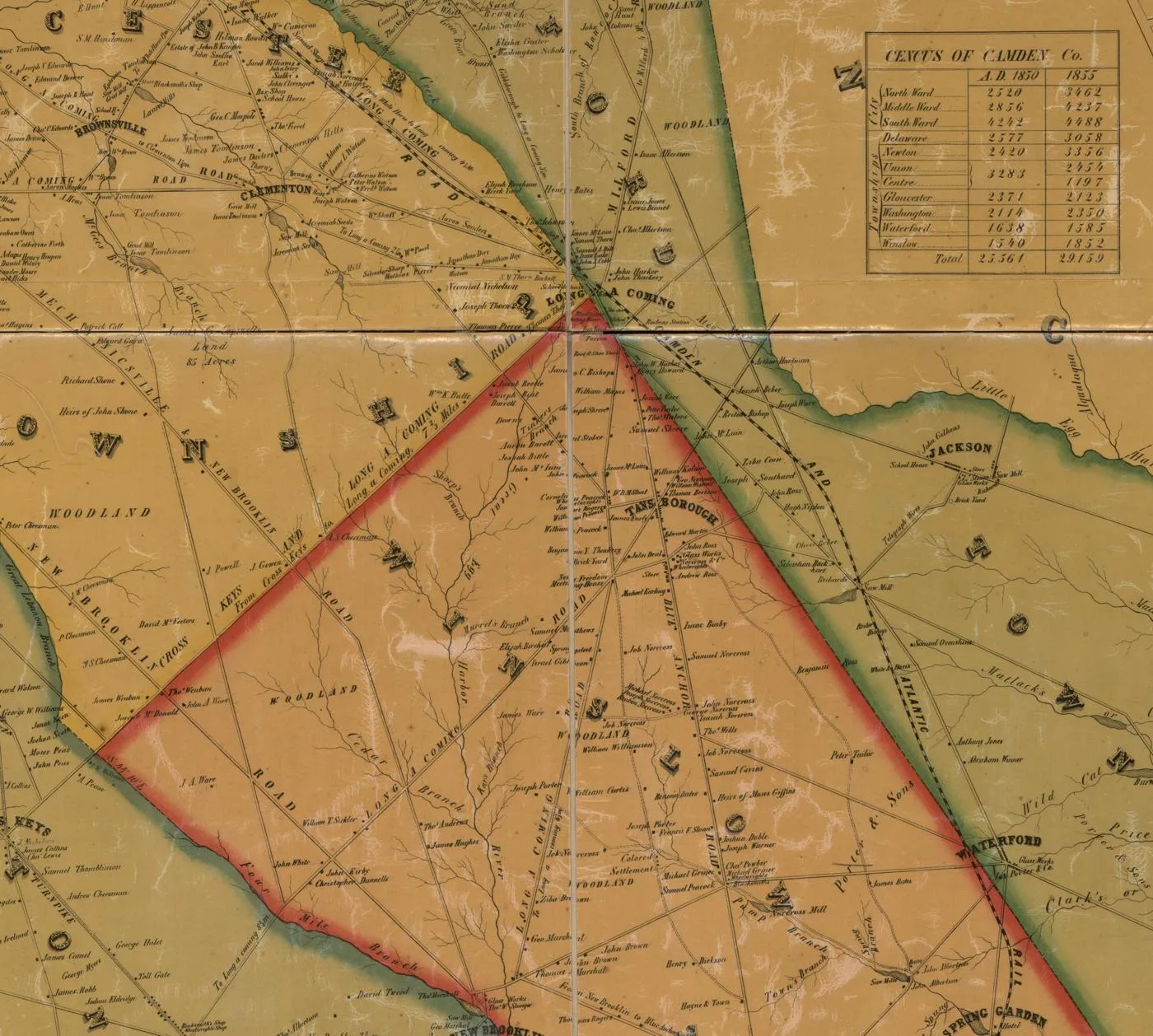
Hand coloring
Many maps were printed in black ink and colored afterward with a brush. On this survey the color picks out township lines, so each one is easy to follow.
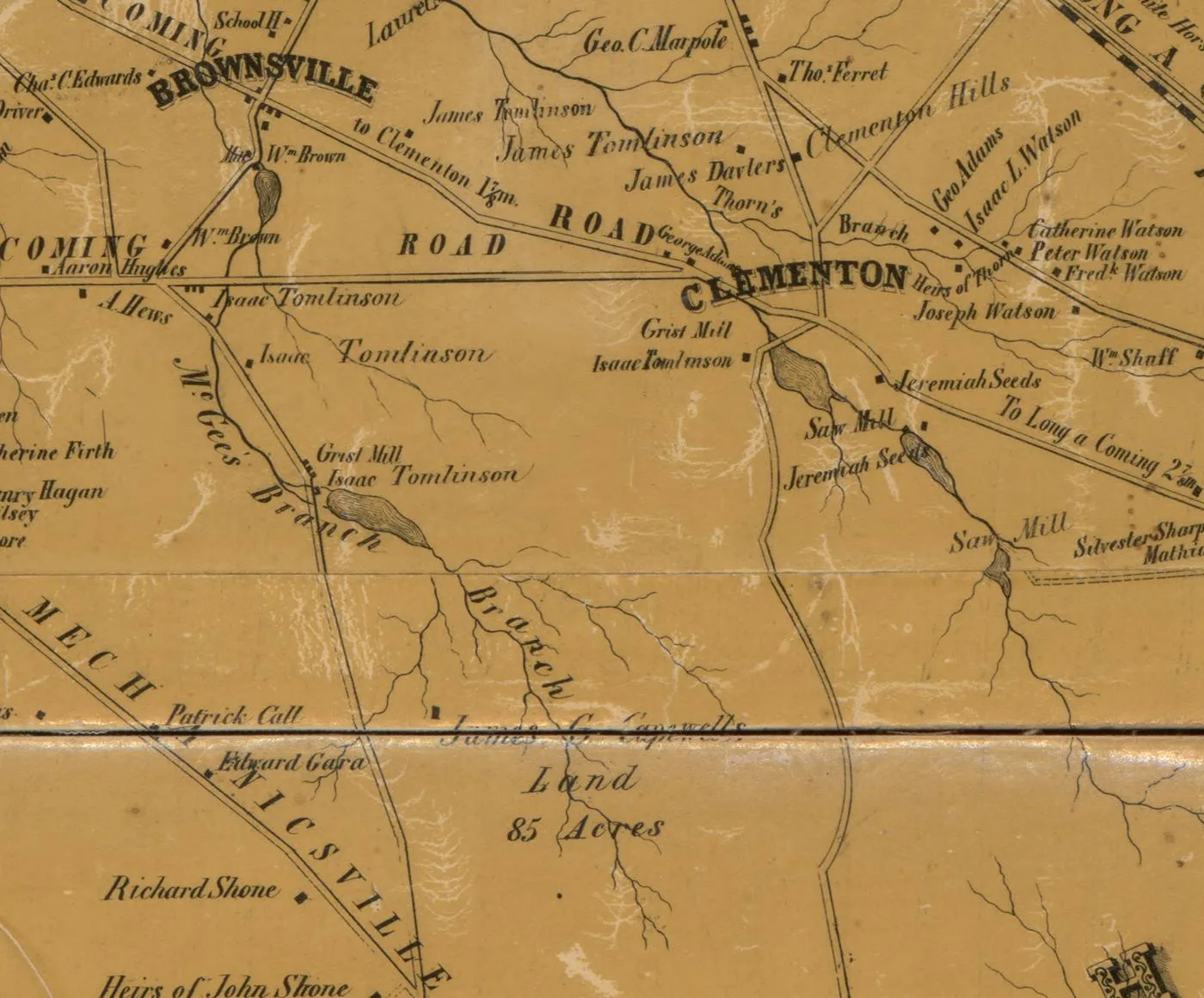
Landowner names
County surveys of the 1800s often printed the householder's name beside each building. For family history, this is where a map stops being a picture and becomes a record.
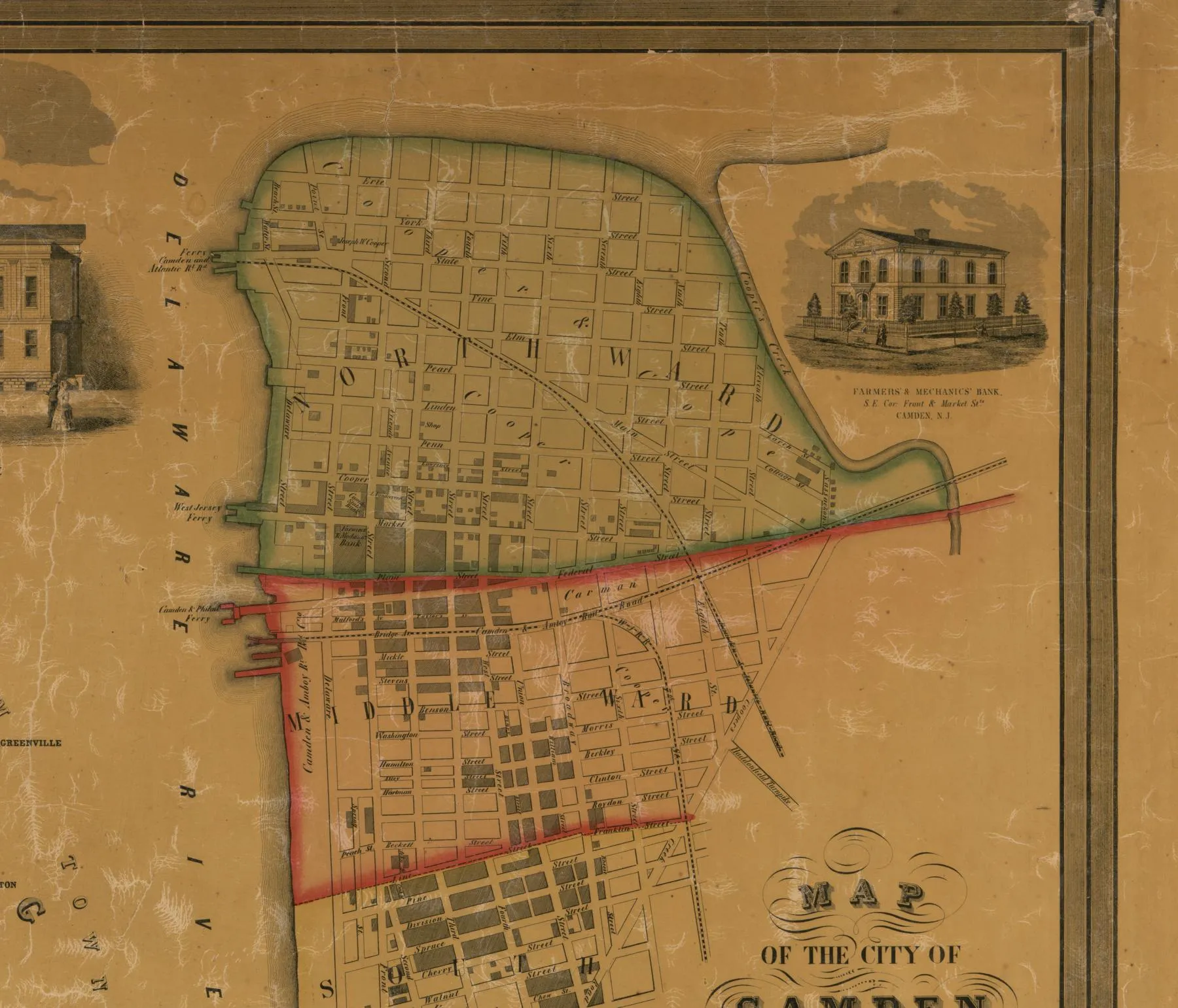
Insets
A small map within the big one, usually a town drawn at a larger scale so its streets and buildings fit. This county map carries three: Camden, Gloucester and Haddonfield.
Original or reprint?
Five things to check.
- Look through a magnifier. Modern prints break into a grid of tiny dots. Engraved and lithographed lines are solid ink.
- Find the plate mark. Copperplate engravings were pressed hard into damp paper and often leave a dent around the image.
- Hold it to the light. Older handmade paper shows faint lines and watermarks. Modern paper looks even.
- Check the color. Hand coloring sits on the surface, a little uneven, sometimes over the lines. Printed color is perfectly even.
- Read the back and the edges. Atlas folds, binding holes and text on the reverse are all clues to where a map came from.
Caring for your map
Keep it for another century.
- Keep it out of direct sun. Light fades hand coloring for good. Frame behind UV-filtering glass.
- Use acid-free materials. Archival mats and backing board stop the paper from browning.
- Skip the tape. Never tape, glue or laminate a map. A good framer will use reversible hinges.
- Avoid damp and heat. Basements, attics and bathroom walls are hard on paper. Steady and dry is best.
- Handle with clean, dry hands. Support the whole sheet when you lift it, and store it flat.
Your turn
Know a place worth mapping?
Tell us where, roughly when, and why it matters. We’ll go looking for an original.